
Published on April 26, 2026
Retargeting Mastery: The Ultimate Path Into Turning Visitors Into Revenue
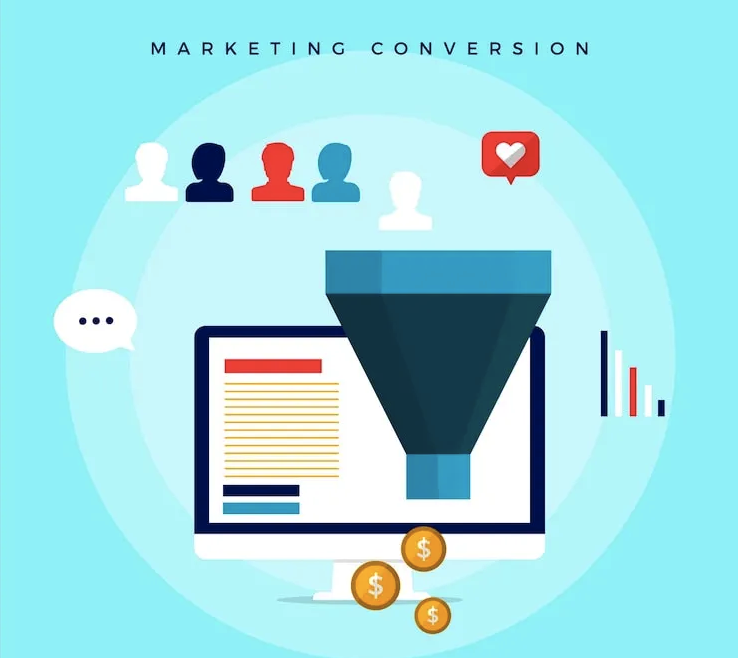
Retargeting is not just another ad tactic. It is the bridge between a brief visit and a real decision. A person can land on your website, read part of an article, explore a service, open an offer page, and then disappear not because they are uninterested, but because the moment gets interrupted. This happens constantly in digital environments. Attention is fragmented, decisions are rarely made on the first touch, and a large portion of strong traffic is lost if there is no system designed to bring that person back.
This is where retargeting changes the logic of advertising. Instead of chasing only new reach and starting from zero trust each time, you begin working with people who have already touched your content, your brand, your product, or your offer. That makes them a different type of audience. They are no longer cold traffic. They have already seen something, already registered part of the value, and already formed some kind of internal context. Retargeting uses that in-between state and turns it into a next step.
Why Retargeting Is So Powerful
Cold advertising always starts with one challenge: the person does not know you, is not sure whether the topic is relevant, and has no immediate reason to act. Retargeting enters after that first contact. That means part of the heavy lifting has already happened. Your name has already passed through the user’s attention. Your message has already left some trace. In many cases there has even been clear interest, just not a completed action.
That is why retargeting campaigns often generate stronger conversion rates and better ROAS than cold campaigns. The reason is not magical. The reason is that you are working with a warmer psychology. The person is not at zero anymore. They are already in a process of evaluation. That creates a very different advertising dynamic. Instead of persuading from scratch, you are clarifying, reminding, organizing, and removing doubt.
For a small business, a content-driven brand, a service offer, or an educational blog, this matters enormously. Many people do not buy, subscribe, or send an inquiry on the first visit. They observe. They compare. They delay the decision. Retargeting keeps the door open.
How Retargeting Reverses the Customer Journey
Traditional advertising relies on broad exposure. It looks for people who might become interested. Retargeting works in the opposite direction. It starts from behavior that already exists and builds a second, more precise interaction on top of it. That makes it far closer to the real logic of decision-making.
When a person visits a page, reads a post, watches a video, opens an offer page, or abandons a cart, they are already giving you a behavioral signal. That signal is more valuable than many interests and assumptions. It shows that the subject has touched their attention. Retargeting takes that signal and transforms it into audience logic. Then the message follows. Not a generic message for everyone, but the next logical contact for a specific type of behavior.
This is where retargeting becomes more than an ad tool. It becomes a system for managing missed opportunities. It does not save everything, but it saves a large share of the value that would otherwise leak out between first interest and lack of action.
First contact
The visitor sees the topic, enters the site, explores, and leaves an early behavioral signal, but is not yet ready to decide.
Second chance
Retargeting returns with the right message at the next moment, when attention can be turned into action.
The Technical Foundation: Pixel, Events, and Data Loops
Effective retargeting begins with strong tracking. In Meta, that usually means Meta Pixel plus Conversions API. In Google environments, that may mean Google tags, GA4 audiences, and remarketing lists. In email marketing, it means CRM segments and behavioral triggers. Regardless of platform, the logic is the same: the system needs to know who visited, what they did, and where they stopped.
Without that, retargeting becomes blind. You may still run ads, but you will not really know who you are talking to. With strong tracking, every page view, content view, add to cart, initiated checkout, scroll depth, video watch, or form start can become a useful signal. Those signals become audiences, exclusions, and optimization patterns.
But there is an important detail here: not every event carries the same value. PageView is useful, but weak. ViewContent is more meaningful. AddToCart, Lead, and Purchase are much stronger signals. The closer an event is to real business value, the more useful it becomes for retargeting and optimization. Poorly configured events can damage the entire system because the algorithm will learn from bad data. This is why event parameter checks, test mode, and browser/server deduplication are not technical trivia. They are part of strategy itself.
Audiences That Actually Convert
The biggest retargeting mistake is to use one broad audience such as “all website visitors” and then show the same message to everyone in it. That audience can still have a role as a broad reminder layer, but it should never be the entire strategy. The real result comes from segmentation based on behavior, time, and stage of intent.
A top-of-funnel retargeting audience may include all visitors from the last 30 to 90 days who have seen content but not moved deeper. A mid-funnel audience may include people who viewed specific articles, watched video, clicked through to a service page, or spent more time on the site. A bottom-funnel audience includes offer page visitors, checkout starters, cart abandoners, or highly engaged users from the last 1 to 7 days.
Psychologically, those groups are completely different. A person who read an article a month ago is not in the same mental state as someone who started checkout yesterday. The first needs context and a new reason to pay attention. The second needs clarity, reassurance, or a small push to finish what was started. If both of them see the same ad, the system loses a large part of its power.
Personalization Without Feeling Intrusive
One of the biggest temptations in retargeting is to become too direct. That is also one of the reasons some campaigns feel creepy. Good personalization does not say, “We saw that you spent five minutes on this page yesterday.” It says, “If this topic matters to you, here is the next useful step.” The difference is enormous.
Retargeting works well when it feels like timely context rather than surveillance. If someone has been reading about productivity, you can bring them back with a practical guide, checklist, bonus worksheet, or a deeper article. If they explored a service, you can show social proof, context, or a clearer offer structure. If they abandoned a cart, you can remind them with calm confidence rather than pressure.
Personalization is not only about text. It is about how closely the message matches the stage the person is in. That is far more important than inserting dynamic details. Strong retargeting feels like a natural continuation of a thought already forming in the user’s mind.
Good reminder
It continues the topic with more clarity, more value, or a helpful next step.
Bad reminder
It repeats the same ad too often and creates pressure instead of trust.
Creative Sequence, Not Creative Repetition
The same ad shown again and again is not a retargeting strategy. It is the fastest route to fatigue, weaker CTR, and damage to brand perception. Retargeting creative should be consistent, but not identical. Each stage should have its own job.
The first message may simply reconnect the person with the topic. The second may deepen the value. The third may answer a likely objection. The fourth may give a specific reason to act. In this way, retargeting becomes a narrative sequence rather than a repetitive banner.
This is also where the psychological work of creative matters. Scarcity, familiarity, social proof, reciprocity, and risk reduction work when used with proportion. Not every audience needs urgency. Not every audience needs a discount. Sometimes what is missing is simply clarity. Other times it is trust. In other cases it is the feeling that “this is for me right now.” Creative strategy needs to answer that unfinished internal question.
Multi-Channel Retargeting Is Stronger Than Single-Platform Retargeting
Meta is a powerful retargeting environment, but it is not the only one. People do not live only on Facebook and Instagram. They read emails, search on Google, see display placements, watch YouTube, open newsletters, and switch between devices. That is why the strongest retargeting systems are often multi-channel.
You can use Meta for social proof and visual reminders, Google Display for broader repeated presence, Search for high-intent return traffic, and email for direct and more personal communication. If someone opened a newsletter but did not click, that is also a retargeting signal. If someone visited from organic search but did not convert, that is a reason for a paid reminder. If someone watched a video but never reached the offer, that is an audience for the next step.
That connected structure is what gives the full system power. Instead of each platform operating in isolation, retargeting starts to work as a network of context. And when context is coordinated, the likelihood of a real conversion rises significantly.
Optimization Is Discipline, Not Guesswork
Retargeting can look easy because it works with warmer audiences. That is exactly the danger. Once it starts producing good results, many businesses stop analyzing it deeply. But real mastery comes from ongoing optimization.
Frequency, CTR, CPC, conversion rate, CPA, and ROAS should be read as one connected system. If frequency rises too much, creative fatigue is close. If CTR is strong but conversion rate is weak, the issue may be the landing page or offer clarity. If ROAS drops after a certain number of days, the audience window may be too long. If the audience is too small, delivery may begin to stall.
A/B testing needs to stay clean. One hypothesis, one important variable, enough volume. Not chaotic changes to headline, image, CTA, audience, and placement all at once. Only then can you understand what is truly driving the result. Good retargeting is never set-and-forget. It is a learning loop.
Where Retargeting Most Commonly Breaks Down
Many campaigns fail not because the idea is weak, but because the system has silent leaks. Poor tracking setup. Missing CAPI. An audience that is too broad. An audience that is too narrow. No exclusions. No creative rotation. No mobile-specific logic. No strong connection between ad promise and landing page experience. Each of these issues can reduce ROI even when the traffic looks active.
Another frequent problem is over-reliance on retargeting. If there is no steady inflow of new visitors, audiences start to get exhausted. That means retargeting has to be part of a wider system, not the only system. Prospecting fills the top of the funnel. Content creates interest. Retargeting closes unfinished loops. Only together do those elements produce durable results.
The Long-Term Power of Retargeting
The biggest value of retargeting is not only that it brings someone back today. It is that it gradually increases the value of every visitor. If you know you can recover part of your traffic with a stronger chance of conversion, then every first visit starts to make more economic sense. That changes the way you look at content marketing, paid traffic, and the customer journey itself.
Over time, retargeting can become a revenue flywheel. New traffic arrives. Some of it converts immediately. Another part enters audiences. Then the right messages bring some of those people back. Some become leads, customers, or subscribers. Later, the same logic can be used for cross-sell, repeat purchase, win-back campaigns, and deeper engagement. This is where retargeting stops being just an ad setting and becomes part of the business model.
Practical Checklist
✓ Set up clean tracking with Pixel, event validation, and server-side signals where possible.
✓ Segment audiences by behavior, time, and intent instead of relying only on “all visitors.”
✓ Use different messages for different stages of the customer journey.
✓ Watch frequency and refresh creative before the audience becomes exhausted.
✓ Create a strong connection between ad message and landing page experience.
✓ Use exclusions so you do not keep spending budget on people who already converted without a reason.
✓ Treat retargeting as part of a full funnel system, not as a standalone trick.
✓ Optimize calmly and regularly instead of making abrupt changes without enough data.
The Most Important Takeaway
Retargeting mastery does not mean simply knowing how to build a custom audience and launch a reminder ad. It means understanding the behavior behind the click, the reason behind the delay, and the structure that turns interest into real value. The strongest retargeting is not loud. It is timely, precise, and psychologically relevant.
When the system is configured well, visitors do not disappear so easily. They remain inside a useful context that you can re-enter with a better message, a stronger sequence, and a higher chance of action. And that is exactly what turns casual traffic into revenue that does not depend only on the first visit.