
Published on April 26, 2026
Conversion Path in Facebook Ads: How the Journey to Action Shapes the Result
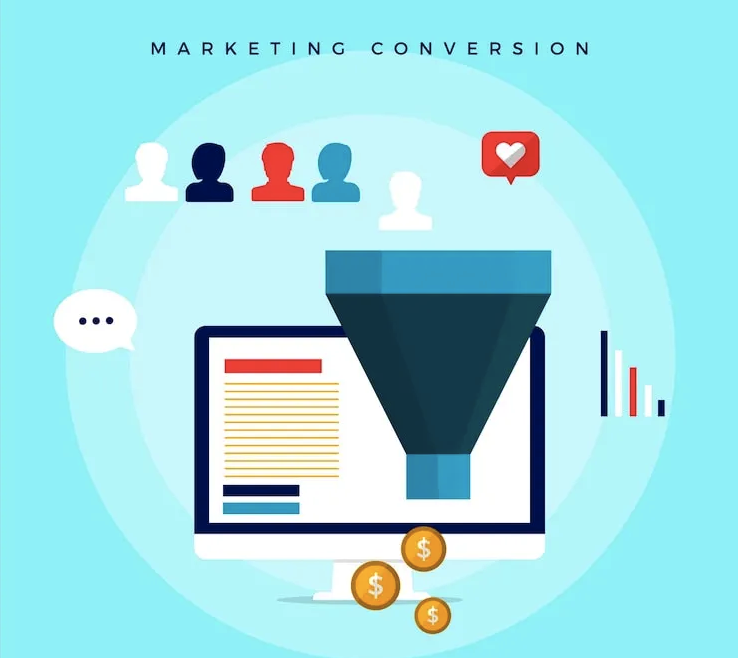
Many campaigns look active on the surface. They have reach, impressions, clicks, and sometimes even a decent CTR. And yet conversions still do not come at the pace you expect. The reason is often not only the ad itself. Much more often, the problem lives inside the conversion path, meaning the full journey from first attention to real action.
When that path is fragmented, confusing, or overloaded, even a good ad starts losing force. People click but do not continue. They arrive but do not orient themselves. They become interested but never reach confidence. That is why strong Facebook Ads results do not come only from a good hook, but from a well-structured conversion path.
What the Conversion Path Really Is
The conversion path is the sequence of steps a person moves through before sending an inquiry, buying, subscribing, or taking another meaningful action. In Facebook Ads, that path starts right in the feed. First comes attention. Then the click. Then the landing page experience. Then the internal evaluation of value. Only after that comes the actual decision.
Many campaigns underperform because they treat conversion as an isolated endpoint instead of a process. If there is too much friction anywhere along the path, conversion rate drops, even if the ad itself is strong. That means optimization must look not only at the ad, but at how the user experiences every next step afterward.
Message Match Between the Ad and the Page
One of the most important conditions for a strong conversion path is message match. If the ad promises a clear solution, but the page greets the person with generic text, unrelated visuals, or a confusing CTA, trust begins to break down. That hesitation is often invisible at first glance, but it strongly shapes behavior.
The person needs to feel they have landed in the right place. That does not only mean repeating the same words. It means carrying forward the same logic, the same emotional rhythm, and the same promise. When the transition from ad to page feels smooth, the conversion path becomes easier and more persuasive.
Strong transition
The ad and the page move in the same direction, so the person continues without internal friction.
Weak transition
After the click, the person enters an environment that sounds different, looks different, and demands reorientation.
Friction Points That Quietly Reduce Conversions
Sometimes the biggest problem is not one major strategic mistake, but several small friction points. Too much text before the CTA. A form that asks for more information than needed. A section that looks attractive but does not help the visitor understand the next step. Or a page that loads slowly and interrupts the inner momentum.
Those small resistances accumulate. Individually they may not look dramatic, but together they make the conversion path harder. That is why strong optimization work is not only about launching new ads. It is also about removing the hidden brakes inside the path to action.
The Right Conversion Path Is Psychologically Clear
People do not make decisions only rationally. They look for internal safety that the next step makes sense. That means the conversion path must answer not only informational questions, but emotional ones too. What exactly do I get? Why is this for me? Can I trust this? What happens after the click?
When the page and the ad together answer those questions, conversion begins to feel more natural. When they do not, hesitation appears. And in digital environments, hesitation rarely waits. It usually closes the page.
Practical Checklist
✓ Check whether the ad message and the landing page message truly align.
✓ Reduce unnecessary steps between the click and the action.
✓ Audit the page for friction points, not only visual flaws.
✓ Make sure the CTA is clear, visible, and logical for the context.
✓ Optimize the conversion path as a system, not only the ad itself.
The Most Important Takeaway
The conversion path is the quiet infrastructure behind strong performance. If it is clear, smooth, and psychologically well arranged, Facebook advertising starts working much more meaningfully. And when it is confused, even strong traffic gets lost along the way.