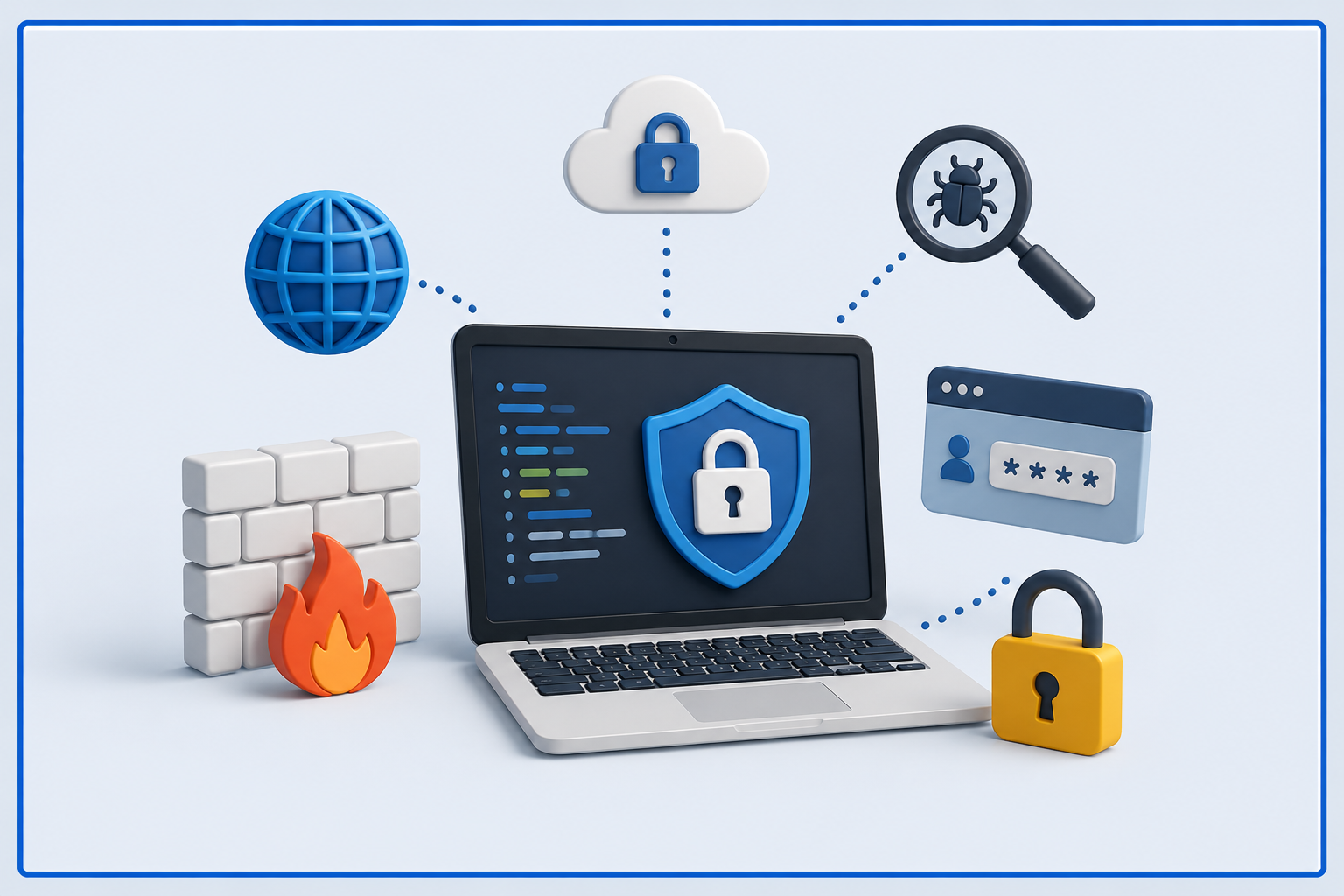
Adults today rely on email, online banking, social media, cloud tools, chats, websites, and digital platforms every day. That means cybersecurity is no longer optional. It is part of responsible personal and professional life.
This cybersecurity course introduces adults to the basics of online safety in a clear, practical, and beginner-friendly way. The course helps participants understand how to protect personal data, recognize online risks, create safer passwords, avoid suspicious links, and communicate more responsibly online.
What You Will Be Able to Do
By the end of the course, participants will be able to:
- protect personal data and understand why privacy matters
- manage privacy settings on devices, apps, and online platforms
- recognize unsafe links, fake messages, and suspicious online behavior
- create strong passwords and understand two-factor authentication
- use devices, accounts, and Wi-Fi connections more safely
- communicate online with respect, caution, and confidence
- recognize social engineering, manipulation, and online pressure
- think critically about online information, fake news, and digital content
- develop healthy screen-time habits and safer digital routines
Why This Course Matters
Cybersecurity is no longer only a topic for IT professionals. Every adult who uses email, payment systems, digital accounts, social media, or work platforms can become a target of phishing, fraud, data theft, manipulation, and security breaches.
This course is based on one simple principle: real-life digital skills are more useful than abstract theory. Every lesson connects cybersecurity concepts with situations adults already face — passwords, work accounts, suspicious emails, online payments, social media, cloud tools, and everyday digital communication.
The goal is not to create fear, but to help you become a more confident, responsible, and security-aware digital user.
5 Reasons This Cybersecurity Course Stands Out
Practical digital safety for everyday life
You learn skills you can apply immediately in your own devices, accounts, work tools, and online platforms.
Clear explanations for beginners
Complex cybersecurity topics are explained through simple examples, visual logic, and situations people face every day online.
Critical thinking, not fear
The course teaches you how to ask better questions, check information, and recognize manipulation before it becomes a problem.
Online and offline learning activities
Lessons include examples, tasks, guided exercises, and practical activities that support real understanding and safer habits.
Built for real-world digital confidence
The course combines digital literacy, practical protection skills, and a structured learning approach that helps adults stay safer online.
Course at a Glance
Advantages
Practice-based learning
Participants work through guided exercises, simulations, discussions, and real-life digital case tasks during the learning process, not only after theory.
Expert mentor guidance
The course is guided through structured explanations, practical context, and beginner-friendly support for people who want more confidence online.
Real-world scenarios
Content is built around situations adults actually face: phishing emails, suspicious links, account risks, online payments, public Wi-Fi, and privacy exposure.
Future-focused curriculum
The course also introduces modern topics such as AI-related risks, digital manipulation, deepfakes, platform behavior, and practical digital ethics.
Project-based finale
The course ends with an applied final task, such as creating a personal cybersecurity routine or a practical digital safety action plan.
Critical thinking focus
The focus is not only on what to click or avoid, but also on how to think, question, verify information, and recognize manipulation online.
Full Course Program — 9 Modules
| Module | Topics |
|---|---|
| Module 1 Introduction to Cybersecurity | ✓ What the internet is, how it works, and why it matters ✓ Core concepts: personal data, digital identity, and privacy ✓ Safe communication online — rules and real examples ✓ Identifying risks in everyday digital situations ✓ Practical task: design a cybersecurity sticker pack |
| Module 2 Internet Threats for Devices | ✓ Phishing, scams, malware — how each type works ✓ How viruses spread and what infection looks like ✓ Public Wi-Fi dangers and how attackers exploit them ✓ Deepfake technology: voice and video manipulation ✓ Practical task: analyze suspicious messages; audit device settings |
| Module 3 Protecting Devices & Accounts | ✓ Antivirus software: types, installation, and how they work ✓ How to create strong, memorable passwords ✓ Setting up two-factor authentication (2FA) ✓ Safe Wi-Fi practices: VPN, HTTPS, and public networks ✓ Practical task: create a personal device security plan |
| Module 4 Personal Data & Privacy | ✓ Cookies, tracking technologies, and your digital footprint ✓ What data is safe to share — and what is never safe ✓ Cloud storage, backups, and secure file management ✓ Cryptography basics: Caesar cipher, Atbash, HTTPS, hashing ✓ Practical task: build and protect a virtual online shop |
| Module 5 Social Media & Content Safety | ✓ Social media risks: fake accounts, bullying, stalking, scams ✓ How algorithms shape what you see — and how to filter it ✓ Creating and publishing safe content online ✓ Screen time management and building a healthy digital routine ✓ Practical task: design a safe social profile; create a time plan |
| Module 6 Gaming & Emotional Safety | ✓ Online gaming history, platforms, and age ratings ✓ In-game purchases, donations, and fraud schemes ✓ Recognizing toxic behavior and setting healthy limits ✓ Understanding gaming addiction: signs and solutions ✓ Practical task: analyze a game’s safety checklist; help a character fix his game |
| Module 7 Information, Creativity & Safe Learning | ✓ Fact-checking: how to identify fake news and verify sources ✓ Safe online creative tools: design, comics, 3D, music ✓ Evaluating online schools and learning platforms ✓ Blogging and content creation: the 3-filter rule ✓ Practical task: create a fake news story — then fact-check it |
| Module 8 Digital Ethics | ✓ Online behavior rules and the psychology of anonymity ✓ Copyright, plagiarism, and how to protect your own work ✓ Responsible social media use: what is a trap, what is healthy ✓ Deepfakes, AI-generated content, and future ethical challenges ✓ Practical task: add a watermark; evaluate a blogger’s ethics |
| Module 9 Future Technologies & Final Project | ✓ Artificial intelligence: how it works, its benefits and risks ✓ Internet of Things (IoT): smart homes and data access ✓ VR and AR safety: evaluating applications critically ✓ Final project: design a fully protected laptop for your favorite character ✓ Presentation and defense of your cybersecurity solution |
What you will Gain
Hard skills
✓ Recognize phishing emails, suspicious links, and common online scams
✓ Build stronger password routines and use two-factor authentication correctly
✓ Protect devices, accounts, and online payments with safer digital practices
✓ Manage privacy settings across apps, platforms, and everyday digital tools
Soft skills
✓ Develop stronger critical thinking in digital environments
✓ Make calmer and safer decisions online under pressure
✓ Build healthier digital habits and more responsible online behavior
✓ Communicate online with more awareness, clarity, and confidence
Course at a Glance
| Category | Details |
|---|---|
| Subject | Cybersecurity / Digital Safety |
| Age group | Age 18+ |
| Level | Beginner |
| Duration | 9 Modules / 36 Lessons |
| Format | Online |
| Schedule | 2-3 lessons per week (flexible) |
| Language | English |
Who This Course Is For
This course is the perfect fit for:
- Adults aged 18+ who actively use smartphones, laptops, online platforms, or digital tools
- Beginners who want more confidence in online safety without needing prior technical experience
- Professionals, freelancers, and everyday users who want stronger digital protection habits
- People who want to understand how the digital world works and how to navigate it more safely
Prerequisites
To start the course you need:
- Basic ability to use a computer or smartphone
- Ability to follow simple instructions
- Interest in technology and how the internet works
No coding knowledge, cybersecurity background, or specific equipment is required.
Course Format
The course is suitable for beginners and does not require previous technical knowledge. Lessons are structured step by step, with practical examples and guided activities.
- Age: 18+
- Level: Beginner
- Duration: 9 modules / 36 lessons
- Format: Online
- Focus: cybersecurity, privacy, safe communication, critical thinking, digital habits
How the course works
Format: Lessons are available online. Classes are held in small groups of 3 to max 8 students, ensuaring every partisipent gets personal attention and active participation time. My teaching approach:
- Interactive lessons combining guided instructions with hands-on practice
- Group activities, peer discussions, and collaborative problem solving
- Role-plays drawn from real digital scenarious
- A final capstone project presented and defended by the student